中国自动驾驶出租车竞赛因安全问题暂停
China's Robotaxi Race Hits a Safety Pause
继百度Apollo Go在武汉发生大规模系统故障导致百余辆自动驾驶出租车停摆,以及Hello自动驾驶车辆在株洲发生交通事故后,中国自动驾驶出租车行业面临安全审查。据报道,中国已暂停发放新的自动驾驶车辆牌照,并要求进行全国范围的自查和加强应急响应监督。此举标志着行业重心从规模扩张转向安全保障,旨在重建公众信任,长期促进自动驾驶技术发展。
1. 法律意义与背景上下文: 本文报道的中国暂停发放自动驾驶出租车新牌照并加强安全审查,标志着中国在推动人工智能(AI)在交通领域应用时,从追求速度和规模转向了更审慎、以安全为核心的发展策略。此前,中国政府一直积极支持智能网联汽车(ICV)和自动驾驶技术的发展,将其视为国家战略性新兴产业。然而,近期发生的系列安全事件,特别是百度Apollo Go在武汉的大规模系统故障,暴露出自动驾驶技术商业化过程中潜在的公共安全风险和系统稳定性挑战。这一转变对全球自动驾驶产业都具有重要的参考意义,尤其是在技术快速迭代与商业化落地之间寻求平衡的背景下。
2. 核心法律问题与推理: 核心法律问题在于如何平衡技术创新、产业发展与公共安全之间的关系。文章指出,中国交通运输部等三部委呼吁全国范围的自查和加强应急响应监督,这反映了监管机构对自动驾驶技术安全性的高度关注。推理逻辑是,鉴于自动驾驶车辆一旦发生故障可能造成大范围交通瘫痪甚至人员伤亡,现有监管框架和技术成熟度不足以完全应对其风险。因此,暂停新牌照发放并进行全面安全审查,是监管部门在缺乏完善法规和技术标准下的必要干预,旨在为未来更健全的法律法规和技术标准制定争取时间,并确保技术在可控风险下发展。
3. 引用的关键法律条款: 文章并未直接引用具体的法律条款,但其描述的监管行动(如暂停牌照、要求自查、加强应急响应监督)暗示了《道路交通安全法》、《智能网联汽车道路测试与示范应用管理规范》等现有法规的适用,以及未来可能出台的更严格的自动驾驶相关法律法规。这些法规将侧重于车辆安全标准、系统可靠性、数据安全、事故责任认定以及应急处置机制等方面。
4. 对平台运营商和合规从业者的影响: 对于百度、Pony.ai、WeRide等自动驾驶平台运营商而言,这意味着短期内扩张速度将放缓,研发和运营的重心将转向提升系统安全性、可靠性和应急处理能力。合规从业者需要密切关注监管政策变化,加强内部安全管理体系建设,进行更严格的风险评估和测试验证,确保车辆、系统和运营流程符合未来可能出台的更严格的安全标准。此外,建立健全的公众沟通和信任机制也将成为关键。
5. 与类似案例或监管趋势的比较: 此次中国暂停自动驾驶牌照的举动,与美国加州机动车辆管理局(DMV)在2023年暂停Cruise(通用汽车旗下自动驾驶公司)在旧金山的无人驾驶出租车运营许可有相似之处。Cruise因多次发生事故,且被指控未能如实报告事故信息,导致其运营被叫停。这两个案例都表明,即便在技术领先的国家,自动驾驶的商业化落地也必须以严格的安全监管为前提。全球范围内,各国监管机构在面对自动驾驶技术时,普遍采取了审慎的态度,强调测试、验证和逐步放开的原则,以确保公众安全和建立社会信任。中国的此次调整,与全球自动驾驶监管趋严的趋势保持一致。
原文正文
[Skip to content](https://thebambooworks.com/chinas-robotaxi-race-hits-a-safety-pause/#content)
May 5, 2026
[BIDU.US](https://thebambooworks.com/stock/baidu-bidu/) 127.48(+1.3%)
[9888.HK](https://thebambooworks.com/stock/baidu-9888-hk/) 124.20(+1.1%)
[Follow](https://thebambooworks.com/sign-in?next=https%3A%2F%2Fthebambooworks.com%2Fchinas-robotaxi-race-hits-a-safety-pause%2F)
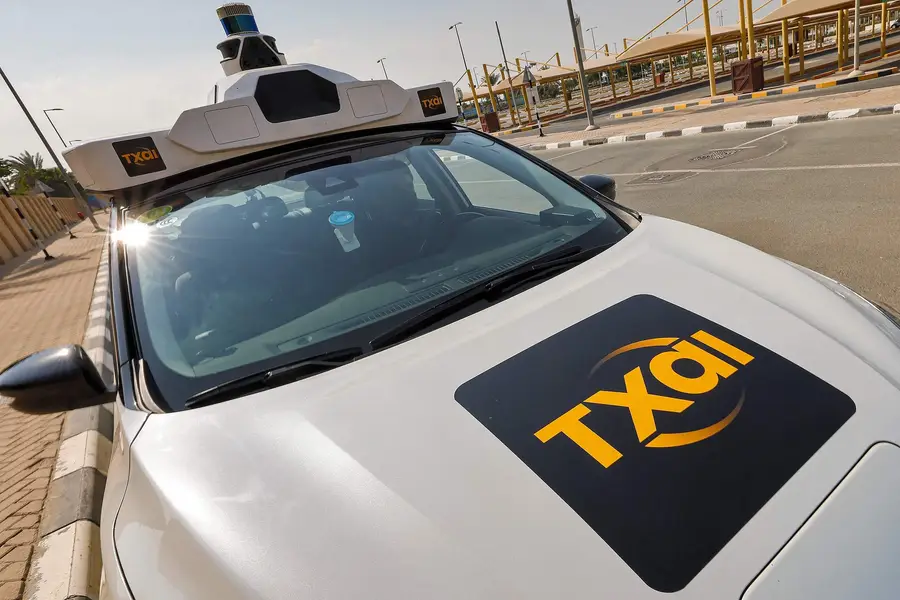
_Baidu’s Wuhan outage, Hello’s Zhuzhou injury accident and a reported pause on new permits suggest China’s autonomous taxi drive is shifting focus to safety_
#### **Key Takeaways:**
- China’s robotaxi story is transitioning from one of ride volume, city coverage and vehicle cost to one of safety after two recent incidents - Baidu still offers the biggest scale in China, but Pony AI, WeRide, XPeng, Caocao and U.S. rivals like Waymo and Tesla are turning robotaxis into a crowded global contest
By Hu Minghe
China’s robotaxi sector was supposed to be entering an era of scale, as operators put more of their vehicles on the road after years of testing. Instead, it’s now getting a safety audit – which some may argue was overdue.
A February report from the China Academy of Information and Communications Technology described 2025 as a turning point for autonomous driving as robotaxis and autonomous delivery vehicles moved from pilots toward commercialization. It framed autonomous driving as a strategic part of global technology competition, and not simply another transport business.
But now China has reportedly tapped the brakes on its own robotaxi program – an important piece of the autonomous driving story – after a couple of recent incidents, including one that left the streets of a major city clogged with stalled driverless cars. The pause is likely to set back China’s robotaxi program, perhaps by up to a year or more. But the move is also likely to help over the longer term by building public trust in a system that still feels strange and slightly uncomfortable to many ordinary riders.
#### **From vehicle safety to system safety**
On March 31, multiple robotaxis from **Baidu’s** (BIDU.US; 9888.HK) fleet of Apollo Go robotaxis suddenly stopped on the roads in Wuhan, capital of Central China’s Hubei province. Local police assigned preliminarily blame to a system failure, with no injuries reported. Reuters reported that at least 100 vehicles were affected, while local media said some passengers were trapped inside stalled vehicles for nearly two hours.
The incident stood out from single-vehicle cases of the past because it appeared to reflect a fleet-level failure. One robotaxi malfunction is a product problem. A hundred robotaxis stopped in traffic begins to resemble an infrastructure problem.
China paused new autonomous-vehicle licenses following the outage, according to several foreign [**media reports**](https://finance.yahoo.com/sectors/technology/articles/china-suspends-autonomous-driving-permits-034604276.html), a move that would slow new pilots and fleet expansions. On April 14, three ministries also called for nationwide self-inspections and stronger emergency-response supervision for intelligent connected vehicle road tests. In Dongguan, Apollo Go was reportedly conducting safety drills and vehicle inspections and would gradually resume after the work was completed.
Wuhan was the biggest bump in the road for the industry to date, but it wasn’t the first warning sign. Last December, a Hello autonomous vehicle in the city of Zhuzhou, in Central China’s Hunan province, was involved in an accident that reportedly sent two people to a hospital and resulted in the temporary suspension of local service.
Public trust is critical for any new technology to gain traction. But it’s especially important for robotaxis, which have the ability to injure people and cause major traffic problems. Riders caught up in the Wuhan outage complained not only about becoming trapped in stalled cars, but also poor SOS support. In Dongguan users lamented Apollo Go’s disappearance. Passengers may tolerate slow, awkward rides if they are cheap and convenient, but they react strongly when they get stranded or their safety is jeopardized.
The scale of the Baidu outage owes in no small part to its leadership in China’s robotaxi race. The company does not break out Apollo Go revenue or profit in its financial reports, but provides information about the scale of the service. It said Apollo Go delivered 3.4 million fully driverless operational rides in last year’s fourth quarter, with weekly rides peaking at more than 300,000 and service available in 26 cities.
#### **Crowded field**
While Baidu was one of China’s earliest companies to embrace robotaxis, it has since been joined by others in an increasingly crowded field. **Pony AI** (PONY.US; 2026.HK) and **WeRide** (WRD.US; 0800.HK) have entered the race in both China and other global markets, showing rapid robotaxi revenue growth but also the heavy cost of fleet expansion. Pony AI’s fleet currently exceeds 1,400 vehicles, while WeRide has reported triple-digit robotaxi revenue growth. Both companies’ robotaxi businesses are still losing money at the operating level.
Apart from those leaders, **XPeng** (XPEV.US; 9868.HK) says its VLA 2.0-equipped robotaxi has started public road testing, with trial operations planned for later this year. **Caocao** (2643.HK), the ride-hailing arm of Geely, has said it plans to deploy thousands of purpose-built robotaxis globally in 2027 and is targeting 100,000 vehicles by 2030.
Outside China, names like Alphabet-backed **Waymo** and **Tesla** (TSLA.US) are leading the race, while others like **Uber** (UBER.US) are placing their bets through investments and partnerships with direct operators like Pony AI and WeRide.
Analysts project China’s robotaxi fleet could nearly triple this year, though those predictions were probably made before the Baidu outage and latest safety pause. Meantime, some forecasts see global autonomous taxi services becoming a multibillion-dollar market by 2035 as more vehicles exit the testing lane and move into the taxi mainstream.
#### **Geopolitics enters the picture**
Geopolitics are also becoming an increasing part of the global robotaxi story. China has sold millions of new passenger cars with Level 2 (L2) driver-assistance functions and opened tens of thousands of kilometers of test roads across vehicle-road-cloud pilot cities. In March, XPeng Chairman He Xiaopeng argued China should move faster from L2 to Level 4 (L4) vehicles – the lowest level considered fully autonomous in a six-tiered system from L0 to L5.
Notably, no foreign companies have entered China’s robotaxi markets despite its big potential. While none appears to have commented about that decision, many may worry about heavy regulation and overheated competition like the type that led Uber to abandon the market after spending billions of dollars there in the early 2010s.
In the U.S., autonomous driving is increasingly viewed through a national-security lens, with new rules restricting some China- and Russia-linked vehicle-connectivity systems and automated-driving software.
China has a real edge with its lower EV costs, dense city pilots and local-government support But as the Baidu incident shows, safety problems are also an important factor that can’t be overlooked as companies scale up. Investors have started pricing in that risk. After reports emerged on the permit pause, Baidu’s Hong Kong-listed shares fell 2.8%, while Pony AI and WeRide dropped 5.5% and 4.7%, respectively.
While the outage marks a setback, China’s robotaxi race certainly isn’t ending. Instead, it is entering a new qualification round. In the end, the winners may not be the companies with the most cities, cheapest vehicles or highest ride count. They will be the ones who can show that driverless fleets can behave like public infrastructure: useful when everything works, and still safe and quickly recoverable when something breaks down.
_To subscribe to Bamboo Works weekly free newsletter, click_ [_here_](https://thebambooworks.com/register/)
[X](https://thebambooworks.com/#x "X") [Facebook](https://thebambooworks.com/#facebook "Facebook") [LinkedIn](https://thebambooworks.com/#linkedin "LinkedIn") [Telegram](https://thebambooworks.com/#telegram "Telegram") [WeChat](https://thebambooworks.com/#wechat "WeChat") [Email](https://thebambooworks.com/#email "Email") [Share](https://www.addtoany.com/share#url=https%3A%2F%2Fthebambooworks.com%2Fchinas-robotaxi-race-hits-a-safety-pause%2F&title=China%E2%80%99s%20robotaxi%20race%20hits%20a%20safety%20pause)
[AI/Infrastructure/Resources](https://thebambooworks.com/category/ai-infrastructure-resources/)
[Baidu](https://thebambooworks.com/tag/baidu/), [Tesla](https://thebambooworks.com/tag/tesla/), [robotaxi](https://thebambooworks.com/tag/robotaxi/), [CaoCao](https://thebambooworks.com/tag/caocao/), [WeRide](https://thebambooworks.com/tag/weride/), [Pony AI](https://thebambooworks.com/tag/pony-ai-2/)
## Recent Articles
[](https://thebambooworks.com/brief-star-sports-medicine-doubles-in-heavily-oversubscribed-ipo/)
### [BRIEF: Star Sports Medicine doubles in heavily oversubscribed IPO](https://thebambooworks.com/brief-star-sports-medicine-doubles-in-heavily-oversubscribed-ipo/)
Shares of medical device company Star Sports Medicine Co. Ltd. (1609.HK) tripled from their IPO price when trading began on Tuesday, before giving back some of the gains to close…
May 5, 2026
1609.HKno result from real time api
[](https://thebambooworks.com/brief-metis-techbio-launches-250-million-hong-kong-ipo/)
### [BRIEF: Metis TechBio launches $250 million Hong Kong IPO](https://thebambooworks.com/brief-metis-techbio-launches-250-million-hong-kong-ipo/)
Nanomaterial analytics company Metis TechBio Co. Ltd. (7666.HK) on Tuesday launched its Hong Kong IPO, aiming to raise about HK$2 billion ($255 million) by selling 201 million shares for HK$10.50…
May 5, 2026
7666.HKno result from real time api
[](https://thebambooworks.com/budweiser-apac-profit-sags-amid-weaker-margins/)
### [BRIEF: Budweiser APAC profit sags amid weaker margins](https://thebambooworks.com/budweiser-apac-profit-sags-amid-weaker-margins/)
Beer maker Budweiser Brewing Co. APAC (1876.HK) announced on Tuesday its net profit fell 3.4% year-on-year to $226 million in the first quarter. Its normalized EBITDA came in at $463…
May 5, 2026
[1876.HK](https://thebambooworks.com/stock/budweiser-apac-1876-hk/) 8.01(+1.0%)
[](https://thebambooworks.com/brief-manycore-forms-strategic-partnership-with-hony-affiliate/)
### [BRIEF: Manycore forms strategic partnership with Hony affiliate](https://thebambooworks.com/brief-manycore-forms-strategic-partnership-with-hony-affiliate/)
Virtual interior design company Manycore Tech Inc. (0068.HK) last Thursday announced it has formed a strategic partnership with Goldstream Investment Ltd. (1328.HK) to accelerate its global expansion. Under the agreement,…
May 4, 2026
0068.HKno result from real time api
1328.HK5.02(-3.3%)
[X](https://thebambooworks.com/#x "X") [Facebook](https://thebambooworks.com/#facebook "Facebook") [LinkedIn](https://thebambooworks.com/#linkedin "LinkedIn") [Telegram](https://thebambooworks.com/#telegram "Telegram") [WeChat](https://thebambooworks.com/#wechat "WeChat") [Email](https://thebambooworks.com/#email "Email") [Share](https://www.addtoany.com/share#url=https%3A%2F%2Fthebambooworks.com%2Fchinas-robotaxi-race-hits-a-safety-pause%2F&title=China%E2%80%99s%20robotaxi%20race%20hits%20a%20safety%20pause%20-%20Bamboo%20Works%20-%20China%20stock%20insights%20for%20global%20investors)
Copy link
✓
Thanks for sharing!
Instantly find any service to add to
[AddToAny](https://www.addtoany.com/ "Share Buttons")
[More…](https://thebambooworks.com/chinas-robotaxi-race-hits-a-safety-pause/#addtoany "Show All")
A2A
reCAPTCHA
Recaptcha requires verification.
protected by **reCAPTCHA**